Blog
Cape Town Flooring: Prevent Moisture Damage, Buckling & Rising Damp
You’ve invested in beautiful new flooring, only to find it lifting, buckling or making annoying squeaks a few months later. If you live in Cape Town, you’re not alone.
The city’s Mediterranean climate, winter rainfall, coastal humidity, and older housing stock create conditions in which moisture is one of the biggest threats to long-lasting flooring installations. While many homeowners blame the flooring product itself, the real problem often starts much deeper—inside the concrete slab beneath your feet.
Whether you’ve chosen Luxury Vinyl Plank (LVP), engineered wood or laminate flooring, moisture that rises through concrete or remains trapped in the subfloor can lead to costly, often preventable failures. The good news is that proper concrete moisture testing, waterproofing, and subfloor preparation can significantly reduce the risk of these issues before your flooring is installed.
Why Cape Town Homes Are More Vulnerable to Moisture Damage
Areas close to the Atlantic Ocean and False Bay are particularly susceptible to moisture-related flooring problems because humidity levels fluctuate throughout the year. Even homes that appear perfectly dry can have moisture migrating through the concrete slab from below. This is why professional flooring installers never rely solely on visual inspection.
Cape Town presents several unique challenges that make moisture management especially important. Unlike many inland areas, homes in Cape Town are exposed to:
- High coastal humidity.
- Heavy winter rainfall.
- Groundwater movement.
- Older homes with limited damp-proofing.
- Concrete slabs that remain damp for extended periods.
- Sea air that slows evaporation.
Why Moisture Is the Biggest Enemy of Modern Flooring
Modern flooring systems are designed to perform for decades—but only when installed over a properly prepared subfloor. Moisture trapped beneath the floor affects almost every component of the installation:
- Flooring adhesives lose their bond.
- Timber products expand.
- Laminate cores swell.
- Concrete releases moisture vapour.
- Expansion joints become stressed.
- Boards begin moving against one another.
The result is flooring that looks older than it should and may require expensive replacement long before its expected lifespan.
How Moisture Affects Luxury Vinyl Plank (LVP)
Many homeowners assume that because Luxury Vinyl Plank flooring is waterproof, moisture cannot damage it. Unfortunately, this is only partially true. The surface of the plank is waterproof; the installation system underneath is not. Moisture rising through concrete can:
- Break down adhesives.
- Cause glue failure.
- Create bubbles beneath planks.
- Lift edges.
- Cause movement.
- Encourage mould beneath the flooring.
Even click-lock LVP systems can begin separating if the concrete slab continues releasing excessive moisture. Successful LVP installation always begins with proper moisture testing and a dry, stable substrate.
Why Laminate Flooring Swells
Laminate flooring contains a high-density fibreboard core. Although the decorative surface is highly durable, the core remains vulnerable to moisture. Once water enters the board, it begins expanding. Common symptoms include:
- Raised Joints.
- Peaking.
- Soft Spots.
- Swollen Edges.
- Curled Corners.
- Irreversible Damage.
Unlike surface spills that can often be cleaned quickly, moisture coming from underneath the floor can remain unnoticed until permanent damage has occurred.
Engineered wood isn’t immune either; engineered wood is often recommended because it is more dimensionally stable than solid timber, however; “more stable” does not mean moisture-proof. Persistent moisture beneath engineered flooring may cause:
- Buckling
- Cupping
- Crowning
- Gapping
- Delamination
- Adhesive failure
These issues usually develop gradually before becoming obvious.
Rising Damp: The Silent Flooring Killer
One of the most common moisture issues affecting older Cape Town homes is rising damp. Rising damp occurs when groundwater travels upward through porous building materials such as:
- Concrete
- Brick
- Mortar
- Cement Screeds
As moisture moves upward, it carries salts that can damage adhesives and flooring systems. Typical warning signs include:
- Damp skirting boards.
- Peeling paint.
- White salt deposits.
- Musty smells.
- Flooring lifting around walls.
- Persistent moisture despite dry weather.
Installing new flooring without addressing rising damp simply covers the problem temporarily. The moisture continues moving upward until the floor eventually fails.
Why Floors Start Squeaking
Squeaky floors are often blamed on poor workmanship; in reality, moisture frequently plays a major role. When timber-based flooring repeatedly expands and contracts because of changing moisture levels, movement develops between:
- Boards
- Fasteners
- Underlays
- Concrete slabs
Every small movement creates friction. Eventually that friction becomes the familiar squeak homeowners hear every day. Addressing the moisture source often prevents these issues before they begin.
Concrete Moisture Testing: The Most Important Step Before Installation
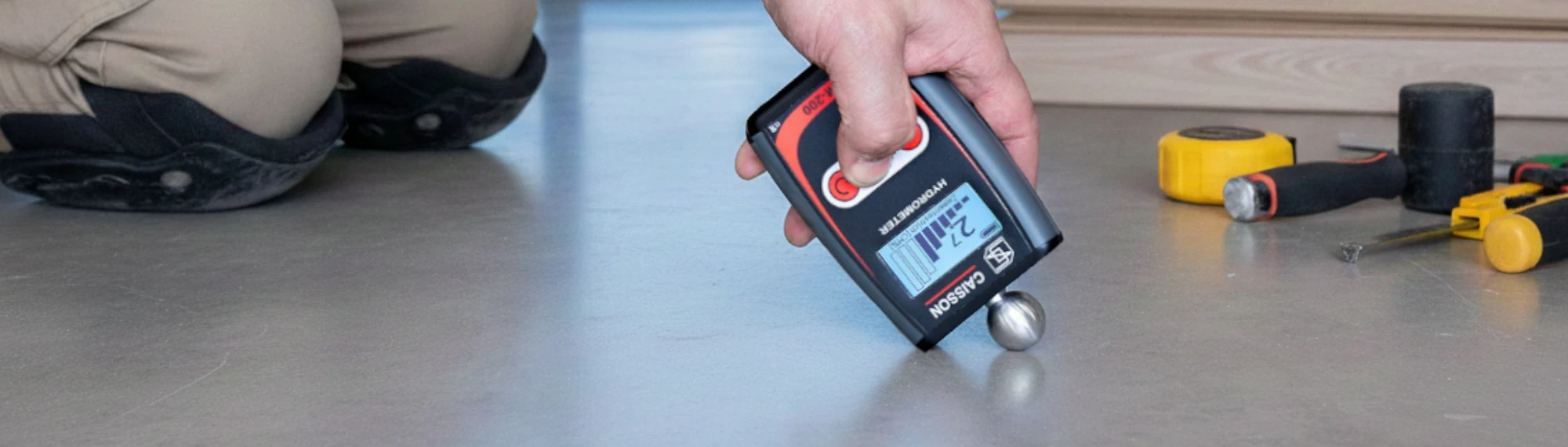
One of the biggest mistakes during flooring installation is assuming that concrete which looks dry is ready for flooring; concrete continues releasing moisture long after it appears cured. Depending on slab thickness, weather conditions and humidity, moisture may remain trapped for months. Professional installers use moisture meters for concrete moisture testing to determine whether installation can proceed safely. Testing helps identify:
- Moisture trapped inside the slab.
- Areas with excessive dampness.
- Risk of adhesive failure.
- Need for waterproofing.
- Areas requiring additional drying time.
Skipping this step increases the likelihood of flooring failures later.
Why Waterproofing Matters Before Flooring Installation
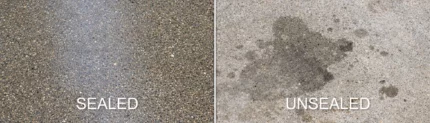
Many homeowners think waterproofing is only necessary for bathrooms; in reality, waterproofing is often essential beneath flooring installed over concrete slabs that are vulnerable to moisture. This is particularly important in Cape Town, where winter rainfall and groundwater movement increase moisture exposure. A quality waterproofing system helps:
- Block moisture migration.
- Reduce rising damp.
- Protect adhesives.
- Extend flooring life.
- Reduce maintenance costs.
- Improve installation reliability.
Proper Subfloor Preparation Makes All the Difference
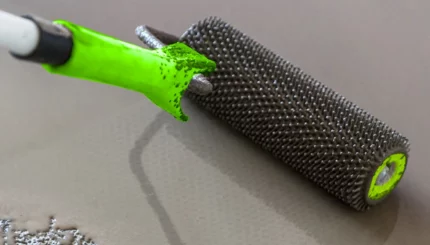
No flooring system performs well on a poorly prepared surface; professional subfloor preparation creates the ideal foundation before installation. Preparation typically includes:
- Grinding – removes contaminants and creates a suitable profile.
- Adhesive removal – old adhesive residues reduce bonding strength.
- Levelling – uneven floors create stress points.
- Surface cleaning – dust contamination prevents proper adhesion.
- Repairing cracks – cracks allow moisture pathways to develop.
- Professional preparation tools improve installation quality while reducing future problems.
Process for Long-Lasting Flooring
Professional installers typically follow this process:
- Step 1: Inspect the slab.
- Step 2: Conduct concrete moisture testing.
- Step 3: Identify signs of rising damp.
- Step 4: Apply waterproofing where required.
- Step 5: Prepare the concrete using professional floor preparation equipment.
- Step 6: Confirm acceptable moisture readings.
- Step 7: Install LVP, laminate or engineered wood flooring.
Skipping any step significantly increases the chance of future flooring failure.
Why DIY Moisture Checks Often Miss the Problem
Many homeowners rely on simple plastic-sheet tests or visual inspection. Unfortunately, these methods cannot accurately measure moisture within the concrete slab. Professional moisture meters provide objective readings that help installers decide whether the floor is ready for installation. The cost of testing is small compared to replacing an entire floor.
Why Prevention Costs Less Than Repairs
Replacing damaged flooring can involve:
- Removing existing flooring
- Removing adhesives
- Grinding concrete
- Waterproofing
- Purchasing new flooring
- Reinstallation
- Furniture removal
- Lost time
Proper preparation before installation usually costs only a fraction of these repairs.
Flooring Success Starts Below the Surface
Beautiful flooring is only as good as the surface beneath it.
Whether installing luxury vinyl plank, laminate or engineered wood flooring, long-term success depends on moisture control, proper waterproofing and professional subfloor preparation. Ignoring moisture doesn’t make it disappear. Addressing it before installation helps protect your investment for years to come.
For homeowners across Cape Town, taking the time to test, prepare and waterproof the subfloor can mean the difference between a floor that lasts decades and one that fails within a few seasons. Professional moisture meters, high-quality waterproofing products and reliable floor preparation tools work together to reduce the risks associated with coastal humidity, rising damp and moisture migration—giving your flooring the solid foundation it deserves.
Frequently Asked Questions
Can moisture damage waterproof vinyl flooring?
Yes. While Luxury Vinyl Plank is waterproof on the surface, moisture coming through the concrete slab can damage adhesives, promote mould growth beneath the flooring and cause planks to lift or separate.
How do I know if my concrete floor contains too much moisture?
The most reliable method is professional concrete moisture testing using a moisture meter before installation.
What causes laminate flooring to buckle?
Laminate flooring usually buckles because moisture causes its fibreboard core to swell. Excess moisture may come from leaks, spills or rising damp beneath the floor.
Is waterproofing necessary before installing flooring?
If there is any risk of moisture migration or rising damp, waterproofing is highly recommended to protect both the flooring and adhesive system.
Why do engineered wood floors squeak?
Squeaks often develop when moisture causes expansion and contraction, allowing boards or underlays to move against each other.
Which FloorsHQ products help prevent moisture-related flooring failures?
FloorsHQ offers a complete moisture management solution, including ROX Moisture Meters for accurate concrete moisture testing, STONESHIELD Waterproofing Systems to help control moisture migration and rising damp, and ROX Floor Preparation Tools to prepare concrete surfaces before flooring installation. Using these products together helps create the right foundation for successful LVP, engineered wood and laminate flooring installations. If you require assistance with compiling a list of requirements needed, please reach out to sales@floorshq.com. If there is any risk of moisture migration or rising damp, waterproofing is highly recommended to protect both the flooring and adhesive system.