Design trends, Flooring, Home Improvement, Inspiration

Floral Epoxy Resin Floors: Design Ideas, Trends, Installation & How to Choose the Right Look
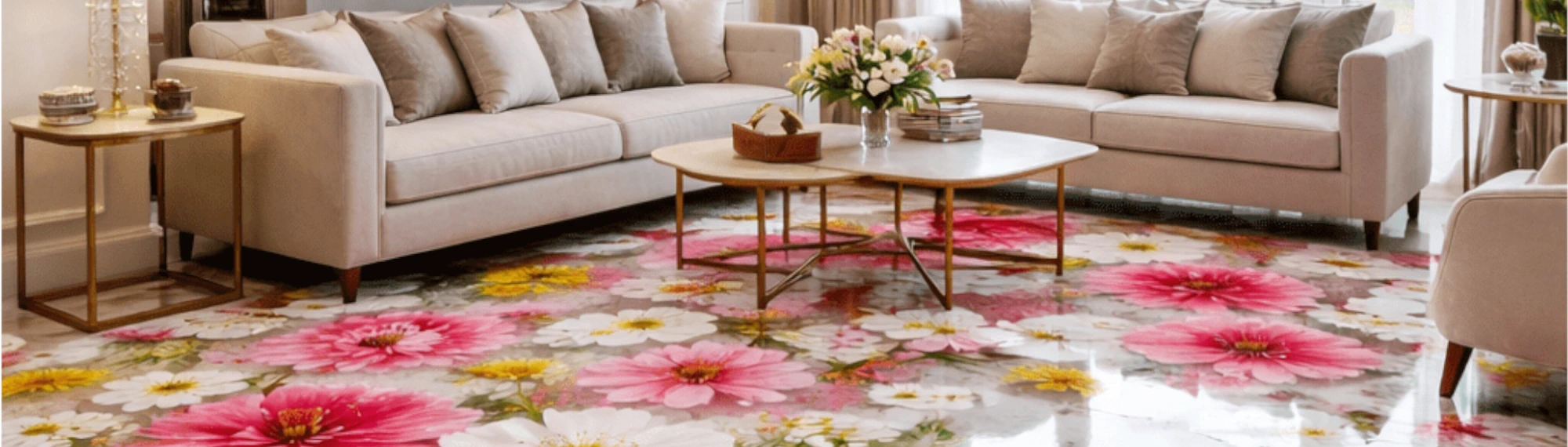
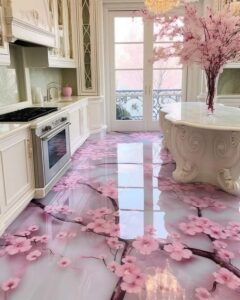
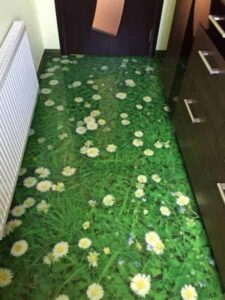
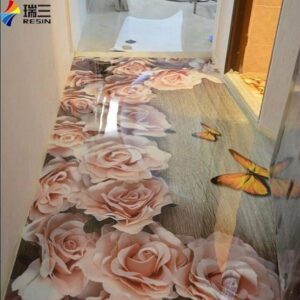
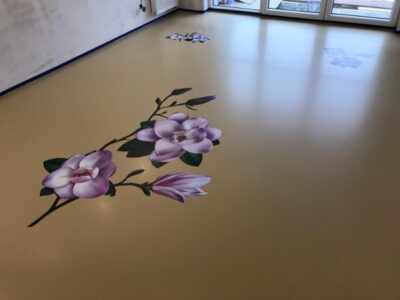
Image of a floral epoxy floor

A floral epoxy resin floor can transform an ordinary surface into a statement feature. By combining decorative resin flooring with flowers, botanical patterns, colour and depth, the floor becomes part of the room’s overall design rather than simply a surface to walk on.

From subtle pressed flowers to dramatic botanical compositions, floral epoxy flooring offers almost unlimited opportunities for customisation. However, creating a successful design requires more than choosing attractive flowers. The size of the room, existing décor, lighting, furniture, traffic and flooring requirements should all be considered.

What Is a Floral Epoxy Resin Floor?

A floral epoxy resin floor is a decorative resin flooring system that incorporates dried flowers, pressed flowers, petals, leaves, grasses, botanical elements or floral artwork beneath a clear or translucent resin layer.

Designs can range from a few delicate flowers on a neutral background to dense wildflower patterns or large-scale botanical artwork making the result subtle and understated or highly dramatic, depending on the desired appearance.

Common decorative elements include:

  • Dried or pressed flowers
  • Flower petals
  • Leaves and grasses
  • Botanical fragments
  • Printed floral artwork
  • Resin pigments
  • Metallic accents
  • Layered decorative effects

Flooring Has Become Part of Interior Design

Decorative epoxy flooring has moved beyond simple colours and industrial applications. Modern resin floors can incorporate metallic effects, flakes, stone effects, graphics, geometric patterns and custom artwork.

Floral flooring takes this concept further by making the floor itself a major design feature.

Highly Customised Designs

Designs can be:

  • Minimalist
  • Organic and random
  • Symmetrical or geometric
  • Monochromatic
  • Dense and colourful
  • Inspired by a particular flower
  • Matched to an interior
  • Designed around a brand
Image of cherry blossom floor design

A floral resin floor can be created specifically for an individual space. The flower type, colour, scale, density, background, composition and finish can all be customised.


Natural Materials Meet Modern Flooring

Clear resin can also create visual depth by placing decorative elements within different layers, giving the impression that flowers or leaves are suspended beneath the surface.

The contrast between delicate botanical materials and a smooth resin surface creates a distinctive combination of natural and contemporary design.

What Flowers Can Be Used in Epoxy Resin Flooring?

Not every flower is suitable for encapsulation. Moisture content is one of the most important considerations.

A flower can appear dry while still containing moisture internally. Once that moisture is trapped beneath resin, it cannot easily escape.

Flowers should therefore be thoroughly prepared before installation. Depending on the material, preparation may involve air drying, pressing or the use of suitable desiccants.

Do not confuse “looks dry” with “is completely dry.”

Moisture trapped beneath an impermeable resin layer can contribute to:

  • Cloudiness
  • Bubbles
  • Discolouration
  • Curing problems
  • Flower deterioration
  • Mould or decay
  • Loss of visual clarity

Suitable materials may include:

  • Dried flowers
  • Pressed flowers
  • Dried petals
  • Small dried leaves
  • Dried grasses
  • Other appropriately prepared botanical specimens

The suitability of a particular material depends on its condition, structure and the resin system being used.


Real Flowers or Floral Artwork?

There are two main approaches to creating a floral epoxy floor.

Real Botanical Elements

Dried or pressed flowers can provide:

  • Genuine natural material
  • One-of-a-kind designs
  • Organic shapes
  • Natural colour variation
  • Individual character

However, they require careful preparation and an appropriate resin system.
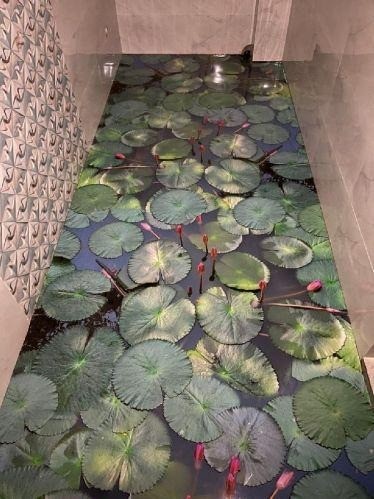
Printed or Artistic Floral Designs

Floral artwork or printed imagery can provide greater control over:

  • Colour
  • Scale
  • Repetition
  • Large-scale compositions
  • Design consistency

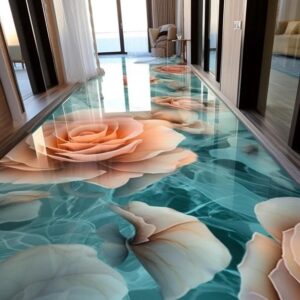
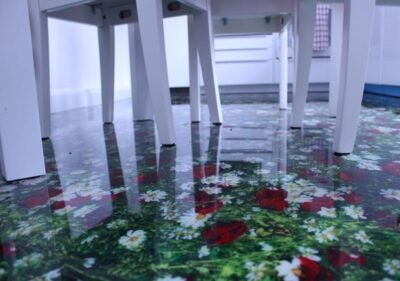
For very large botanical compositions, artwork may be more practical than arranging hundreds of individual flowers.

How Is a Floral Epoxy Floor Installed?

The exact process depends on the substrate, resin system, design and intended use, but the general installation process includes:

1. Prepare the Substrate

The substrate must be suitably prepared before the resin system is applied. Depending on its condition, this may include:

  • Mechanical grinding
  • Cleaning
  • Contaminant removal
  • Crack repair
  • Filling imperfections
  • Moisture assessment
  • Priming

A beautiful design cannot compensate for poor substrate preparation.

2. Plan the Design

Plan the complete composition before mixing the resin.

Consider:

  • Flower size and colour
  • Density and orientation
  • Focal points
  • Room dimensions
  • Furniture
  • Walkways
  • Lighting
  • Viewing angles

A design that looks effective on a small sample may appear completely different when installed across a large floor.

3. Apply the Base Layer

The background can be white, black, neutral, coloured, metallic, translucent or transparent, depending on the desired effect.

The background is important because it can dramatically change how the flowers appear.

4. Position the Flowers

Prepared flowers are carefully positioned according to the planned design. Layering can help control movement and prevent botanical elements from floating or becoming displaced when resin is applied.

5. Encapsulate the Design

Additional resin is applied over the flowers to encapsulate them while maintaining the desired clarity and appearance.

Careful application can help minimise disturbance and trapped air.

6. Allow the Resin to Cure

The resin must cure according to the manufacturer’s instructions. Temperature, humidity, mixing ratio, application thickness and curing time can all affect the final result.

For high-value or complex installations, creating a sample panel before completing the entire floor is strongly recommended.

How to Choose the Right Floral Epoxy Design

The best design is not necessarily the most colourful or elaborate. It is the one that works with the space as a whole.

1. Consider the Room Size

Large rooms can generally support larger-scale botanical compositions, while smaller spaces often benefit from simpler designs.

Large rooms:
Oversized flowers, branches, stronger contrasts and more open compositions.

2. Match the Existing Colour Palette

Consider the colours already present in:

  • Walls
  • Furniture
  • Cabinetry
  • Countertops
  • Curtains
  • Doors
  • Lighting
  • Architectural features

The floral design can either complement these colours or deliberately create contrast.

Existing InteriorPossible Floral Palette
White and creamPink, lavender or soft blue
Dark modernWhite, gold or deep red
Natural woodGreen, cream and muted floral tones
Minimalist greyWhite, blush or muted botanical colours
Luxury interiorBurgundy, black and gold
CoastalBlue, white and pale green
Wellness/spaSoft greens, whites and natural tones

3. Decide How Dramatic You Want the Floor to Be

Subtle floral:
Small flowers and limited colour work well in bedrooms, boutique offices, bathrooms and wellness spaces.

Moderate floral:
A visible botanical design with plenty of negative space can suit kitchens, living rooms, restaurants, salons and reception areas.

Dramatic floral:
Large flowers, branches and bold colours can create statement floors for luxury homes, hotel lobbies, showrooms, restaurants and high-end retail spaces.

4. Consider the Direction of the Design

A floral floor does not need to look like a repeating tile pattern. Consider whether the design should be:

  • Central
  • Corner-to-corner
  • A border
  • Naturally spreading
  • Concentrated around a feature zone

The composition can be designed to guide attention through the room.

5. Plan Around Furniture

Consider the position of sofas, dining tables, kitchen islands, reception desks, beds and display units before finalising the design.

A beautiful floral feature can lose its impact if it is hidden beneath furniture.

6. Consider Lighting

Natural and artificial lighting can significantly change the appearance of resin flooring.

Windows, skylights, spotlights and LED lighting can interact with reflective surfaces, particularly with high-gloss finishes.

7. Choose the Right Finish

The finish affects the overall appearance of the floral design.

High gloss creates strong reflections, visual depth and a dramatic luxury appearance.

Satin provides softer reflections and a more understated contemporary look.

Matte or lower-sheen finishes can create a softer appearance with less glare where the flooring system permits.

8. Consider Traffic and Function

The decorative design is only one part of a successful flooring system.

Before choosing the complete system, consider:

  • Foot traffic
  • Furniture movement
  • Chemical exposure
  • Slip-resistance requirements
  • Cleaning frequency
  • Sunlight exposure
  • Wheeled equipment
  • Residential or commercial use

The flooring system should be selected for the environment first, with the decorative design working alongside those technical requirements.

9. Use Negative Space

More design does not always mean a better design.

Leaving areas of neutral flooring around the botanical elements can make the flowers more visually effective and prevent the room from becoming overwhelming.

Choosing the Right Background

The background underneath the floral elements can dramatically change the finished appearance.

  • White: Bright and clean
  • Black: Dramatic and sophisticated
  • Soft grey: Contemporary and understated
  • Beige: Warm and natural
  • Pale pink: Soft and romantic
  • Deep green: Botanical and atmospheric
  • Transparent: Creates a stronger connection with the underlying surface

Floral Epoxy Flooring Ideas for Different Spaces

  • Kitchen: Consider cherry blossom, lavender, wildflowers, leaves or soft pastel flowers. A bold floral floor can work particularly well with neutral cabinetry.
  • Bathroom: Smaller spaces can benefit from concentrated botanical designs such as white flowers, tropical leaves or blue and green patterns.
  • Living Room: Large-scale flowers, branches and abstract botanical designs can create an artistic feature floor.
  • Restaurant: Floral flooring can reinforce the identity of a restaurant. For example, a Japanese restaurant might use cherry blossom, while a tropical restaurant could incorporate palms and exotic flowers.
  • Hotel Lobby: Large lobbies can accommodate dramatic botanical compositions that create an immediate visual impression.
  • Beauty Salon or Spa: Soft greens, whites, blush tones and delicate botanical designs can support a calm, relaxing atmosphere.
  • Retail Stores and Showrooms: A customised floral floor can reinforce a premium or boutique aesthetic while demonstrating the possibilities of decorative resin flooring.

Floral Epoxy Design Styles

The possibilities extend well beyond traditional flower patterns.

  • Minimalist Botanical: Small flowers and leaves arranged sparsely across a neutral or transparent background.
  • Wildflower: Multiple flowers, leaves and grasses arranged to create a natural meadow effect.
  • Luxury Floral: Flowers combined with dark backgrounds and metallic accents for a dramatic premium appearance.
  • 3D: Botanical elements positioned within different resin layers to create greater visual depth.
  • Monochrome Floral: Flowers from one colour family for a coordinated and sophisticated appearance.
  • Brand Specific Design: Commercial spaces can incorporate botanical designs that complement corporate colours or brand identity.

Why Professional Application Matters

The finished result depends on careful control of several technical factors:

  • Substrate preparation
  • Moisture control
  • Resin selection
  • Correct mixing
  • Botanical preparation
  • Flower placement
  • Air management
  • Curing conditions

Moisture testing is particularly important because the substrate must be suitable for the selected resin system.

For complex or high-value projects, a sample panel can help confirm the design, flower placement, background, resin clarity and finish before full installation.

How to Maintain a Floral Epoxy Floor

Once fully cured, maintenance should focus on protecting the resin surface and preventing abrasive dirt from building up.

A typical routine includes:

  1. Remove loose dirt and grit regularly.
  2. Sweep or vacuum the floor.
  3. Clean with a suitable floor-cleaning solution.
  4. Deal with spills promptly.
  5. Avoid abrasive cleaning methods unless approved.
  6. Use suitable furniture protection.
  7. Follow the resin manufacturer’s maintenance recommendations.

Keeping the resin surface clean helps maintain the clarity and visual impact of the floral design.

Is Floral Epoxy Flooring Right for Your Project?

Floral epoxy flooring is particularly suited to spaces where the floor is intended to be part of the interior design.

Potential applications include:

  • Feature floors
  • Luxury homes
  • Boutique interiors
  • Restaurants
  • Hotels
  • Retail stores
  • Showrooms
  • Beauty salons
  • Spas
  • Wellness spaces
  • Hospitality environments
  • Creative commercial spaces

However, the complete flooring system should always be selected according to the environment’s requirements, including traffic, chemical exposure, cleaning, slip resistance, sunlight and substrate conditions.

A Simple Formula for Choosing Your Floral Epoxy Floor

Before finalising your design, answer these seven questions:

  1. What is the room used for? Home, office, restaurant, showroom, retail or hospitality?
  2. How large is it? Choose a design scale that suits the available space.
  3. How dramatic should the floor be? Subtle, moderate or statement-making?
  4. What colours already exist? Choose complementary or intentionally contrasting colours.
  5. What is the lighting like? Consider how natural and artificial light will affect the design.
  6. Where will furniture be positioned? Plan the floral composition around functional areas.
  7. What finish is appropriate? Choose between high gloss, satin or a lower-sheen finish where suitable.

Frequently Asked Questions

What is a floral epoxy resin floor?

A floral epoxy resin floor is a decorative resin flooring system incorporating dried flowers, petals, leaves, botanical materials or floral artwork beneath a clear or translucent resin layer.

Can you put real flowers in epoxy flooring?

Yes. Suitable dried or pressed botanical materials can potentially be incorporated into an appropriate resin flooring system. The flowers must be properly prepared and thoroughly dried first.

Can fresh flowers be used in epoxy resin?

Fresh flowers should not be embedded directly into epoxy because they contain moisture. Trapped moisture can contribute to cloudiness, bubbles, discolouration, curing problems and deterioration.

What flowers work best in epoxy resin?

Suitable materials can include dried flowers, pressed flowers, dried petals, small leaves and dried grasses. Suitability depends on the material and resin system.

Are floral epoxy floors durable?

Durability depends on the complete flooring system, including substrate preparation, resin selection, installation and final finish. The system should be selected according to the environment and expected use.

Can floral epoxy flooring be used commercially?

Potentially, yes. It can be suitable for applications such as restaurants, retail stores, showrooms, hotels, salons and hospitality spaces when the complete flooring system is appropriate for the expected conditions.

Should the whole floor be covered with flowers?

No. Depending on the system, floral designs can be finished with high-gloss, satin or lower-sheen finishes.

Does a floral epoxy floor have to be glossy?

Not necessarily. Negative space can make a floral design more effective and prevent the floor from becoming visually overwhelming.

Should I create a sample before installing a floral epoxy floor?

Yes. A sample panel can help you evaluate the flowers, background, resin clarity, design density, layering and final finish before committing to the complete floor.

The Future of Floral Epoxy Flooring

Floral epoxy flooring sits at the intersection of flooring, interior design and art.

As decorative resin flooring becomes more customisable, botanical designs offer an opportunity to create floors that are genuinely individual. A homeowner might choose delicate flowers, a restaurant could develop a botanical design linked to its cuisine, and a hotel or showroom could create a signature feature floor.

The biggest opportunity is not simply copying an existing floral design—it is creating one that belongs specifically to the space.

Before choosing the flowers, consider the atmosphere you want to create. Before choosing colours, look at the existing room. Before committing to installation, create a sample panel or visual mock-up.

Most importantly, don’t overlook the technical side. The flowers may attract attention, but the quality of the finished floor depends on proper substrate preparation, moisture control, resin selection, botanical preparation, mixing, placement, air management and curing.

The goal is not simply to create a beautiful epoxy floor. It is to create a floor that makes the entire space look better.